Pennsylvania’s 2020 presidential election was decided by about 80,000 votes, with Democrat Joe Biden winning the state and earning its 20 electoral votes. State officials certified the results on Nov. 24, 2020.
But even as the ballots were still being counted, unsubstantiated claims of widespread fraud started circulating. Republican lawmakers in the commonwealth repeated those allegations on television, backed lawsuits challenging the results, and ultimately voted to overturn the election results. They did not succeed.
Six years later, several of those lawmakers are seeking reelection, including US Reps. Ryan Mackenzie, Dan Meuser, Scott Perry, Lloyd Smucker, John Joyce, Guy Reschenthaler, Glenn Thompson, and Mike Kelly. Gubernatorial candidate Stacy Garrity also perpetuated false claims about the 2020 election.
Let’s take a look at some of the allegations and actions that helped fuel the theories about election fraud, fact check them, and see who was behind flaming the fire.
Claim: There was widespread voter fraud in Pennsylvania
Fact: No evidence of widespread fraud has been found that could have changed the outcome
In the days after the 2020 election, several Pennsylvania Republicans went on media outlets to question the legitimacy of Biden’s victory.
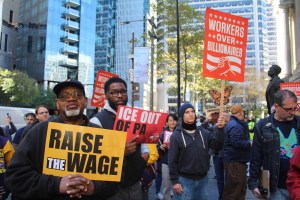
Perry, who represents the 10th Congressional District in central Pennsylvania, attended a “Stop the Steal” rally in Harrisburg in November 2020 and described the state’s electoral votes going to Biden as “a horrific embarrassment” on Fox Business Network.
Meuser, who represents the 9th Congressional District in the eastern part of the state, told Fox News host Sean Hannity that “this is no longer one citizen, one vote,” when asked about the accuracy and accounting of votes in Pennsylvania. However, multiple independent and bipartisan investigations found that the election outcomes were accurate.
Reschenthaler, who represents the 14th Congressional District, told Newsmax that “we know there is voter fraud that occurred.” He also described the shift from Trump’s early election night lead to Biden’s eventual victory as “very suspect.” In fact, the opposite was true—investigations found very clear evidence that no voter fraud occurred. More Republicans voted in person, while more Democrats voted by mail in 2020 in Pennsylvania. Because mail ballots took longer to process, in-person votes were counted sooner, giving Trump an early lead that changed as counties counted additional ballots.
Garrity, the Republican nominee for governor, has also made public statements questioning the legitimacy of the 2020 election.
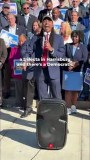
At a Jan. 5, 2021, rally in Harrisburg—one day before the Jan. 6 insurrection—Garrity said Pennsylvania’s voting rules had been “fully violated” and that the election was “tarnished forever.” At a 2022 rally for Trump, she said of the 2020 election, “We know that he won.”
The Keystone fact checked the claims of widespread voter fraud in Pennsylvania in 2020 and could find no evidence of any such fraud. To this day, Trump’s campaign has not been able to present any evidence of widespread fraud in any of its legal challenges.
Additionally, the state’s postelection audits and subsequent court challenges did not find evidence of widespread fraud that changed the outcome.
The Pennsylvania Department of State continues to affirm that claims of voter fraud have been rejected by judges, government agencies, and election experts.
Claim: Pennsylvania had more votes than voters
Fact: Official records show the opposite—more voters than votes recorded in the 2020 presidential race.
Another allegation that circulated after the 2020 election claimed Pennsylvania had counted more votes than people who voted.
The state’s official records contradict that claim.
According to the Department of State, 6,945,045 registered voters in Pennsylvania successfully cast ballots in the November 2020 general election. A total of 6,915,283 votes were recorded in the presidential contest.
That difference does not indicate fraud. Voters can submit a ballot without casting a vote for president.
Biden received 3,458,229 votes in Pennsylvania, compared with Trump’s 3,377,674, according to the state’s official certificate of ascertainment.
Claim: Mail voting and the counting process were evidence of fraud
Fact: Counting ballots after Election Day is not evidence of wrongdoing. It is part of the process.
The counting process became another target of false claims in 2020, particularly as Biden gained ground after Election Day.
Pennsylvania law doesn’t allow counties to begin opening and preparing mail ballots until 7 a.m. on Election Day. Counties also can’t begin tallying mail ballot results until polls close at 8 p.m.
Delayed counting did not mean votes were being fabricated or that the election was rigged. It reflected the procedures in place for processing mail ballots.
Pennsylvania also uses multiple safeguards for mail voting. According to the Department of State, ballot applicants’ identities are verified, ballot envelopes have unique barcodes connecting them to eligible registered voters, and counties follow procedures to prevent voters from casting more than one ballot.
Counties also conduct a legally required audit after elections, along with statewide risk-limiting audits designed to test whether voting systems accurately tabulated paper ballots.
How false claims stayed alive
In addition to Pennsylvania lawmakers, far-right activists and organizations have continued to perpetuate the 2020 election fraud lies as well as question election procedures, scrutinize voter registration records, and challenge ballots in subsequent elections.
Heather Honey, founder of PA Fair Elections, has spent years questioning how the state registers overseas voters, and has raised doubts about the Electronic Registration Information Center and student voters.
An overseas voter might be someone in the armed services who is stationed overseas or someone who is registered to vote in Pennsylvania but who lives overseas.
In 2024, Honey’s group became involved in a legal effort to challenge Pennsylvania’s procedures for overseas voters. The group joined six Republican members of Pennsylvania’s congressional delegation—Perry, Meuser, Smucker, Reschenthaler, Thompson, and Kelly—in a lawsuit seeking additional verification requirements for overseas ballots.
A federal judge dismissed the lawsuit, finding that the requested injunction would disrupt the state’s established election procedures and affect voters.
Shortly before the 2024 election, Charles Faltenovich, Director of PA Fair Elections, filed 28 challenges to overseas voter ballot applications in Allegheny County. Those challenges were part of a larger wave of roughly 4,000 mail ballot application challenges across 14 counties. Every challenge was ultimately dismissed or withdrawn.
Scott Presler, founder of Early Vote Action, has gained national attention for his ongoing searches for noncitizen voters by using county jury records. In August, Presler tried to match a Chester County list of people who had been excused from jury duty because they were not citizens against state voter rolls. He has requested similar records from at least 17 counties.
The Department of State has rejected this methodology to find noncitizen voters, saying a person can appear on a nonjuror list without being registered to vote, and those lists do not contain the personal identifying information necessary to reliably match individuals to voter registration records. They are also frequently outdated when used for a voter-roll match.